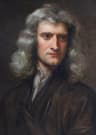
Published in London in 1704, Opticks represents Isaac Newton at his most brilliant experimental peak. In contrast to the heavy geometric Latin of the Principia, Opticks was composed in clear vernacular English, presenting repeatable laboratory procedures.
Through his celebrated experimentum crucis with glass prisms in a darkened room, Newton proved that white sunlight is not a homogeneous fundamental entity, but a composite blend of all colors of the rainbow, each possessing its own characteristic angle of refrangibility.
Newton explained how chromatic aberration plagued refracting lenses, which prompted him to invent the reflecting telescope utilizing a curved mirror (the Newtonian reflector still in widespread astronomical use).
The concluding "Queries" of Opticks were visionary speculations where Newton anticipated radiant heat, chemical affinity, and the particulate nature of light that would later materialize in Einstein’s photon theory.