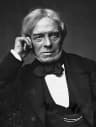
First delivered in 1848 as part of the Christmas Lectures for young people at the Royal Institution of Great Britain, Michael Faraday’s The Chemical History of a Candle remains one of the finest introductions to scientific pedagogy ever produced.
"There is not a law under which any part of this universe is governed," declared Faraday, "which does not come into play and is not touched upon in these phenomena."
Through a sequence of live chemical demonstrations, Faraday showed how capillary action draws wax up the wick, how vaporized hydrocarbons ignite inside the luminous zone, how water vapor and carbon dioxide are produced, and how the chemical process of combustion is fundamentally identical to biological respiration within the lungs.
Faraday’s clarity, infectious enthusiasm, and insistence on direct experimental proof make this classic an indispensable model for contemporary science communicators.