
Loading...
Loading...
Computing & Algorithms
Why this changed the world
Published the first algorithm designed for a general-purpose machine.
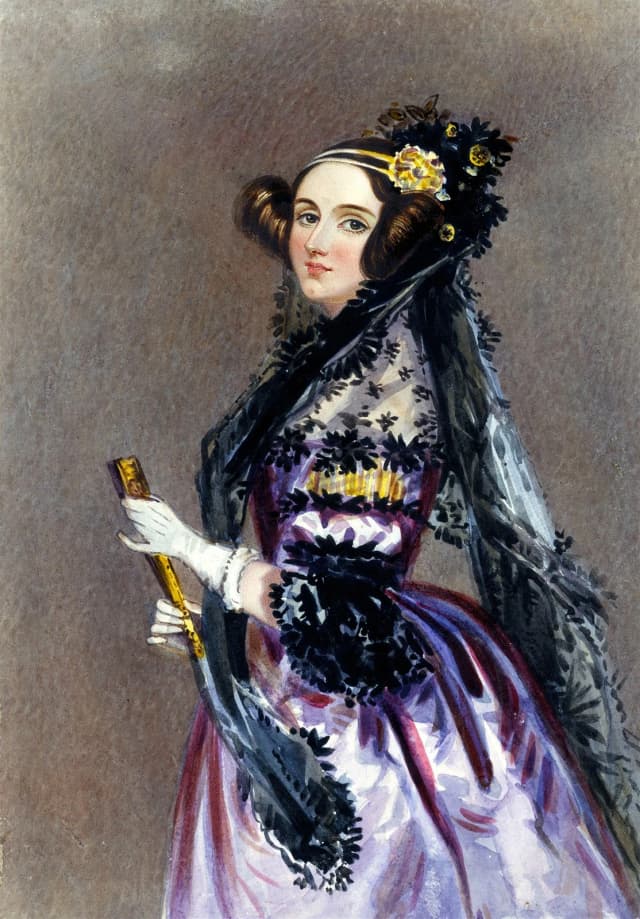
Ada Lovelace encountered Charles Babbage’s plans for the Analytical Engine through mathematics, correspondence, and Britain’s scientific social networks. Her translation of Luigi Menabrea’s account became far more substantial through a series of notes explaining how the proposed machine might operate. One note described a procedure for calculating Bernoulli numbers and is often discussed as an early published computer program.
The Analytical Engine was never completed, so claims about a fully functioning nineteenth-century software practice would be misleading. Lovelace’s deeper contribution was conceptual. She distinguished the machine’s symbolic operations from mere arithmetic and considered how numbers might represent entities such as musical relationships. Historians continue to debate how credit should be divided between Lovelace, Babbage, and their collaborators. The surviving record nevertheless shows a serious mathematical author thinking beyond calculation toward general-purpose symbolic processing.
Published an algorithm for the Analytical Engine to compute Bernoulli numbers.
Envisioned computers working with music, text, and symbols—not only arithmetic.
Explained concepts resembling loops and reusable operations in machine computation.