
Loading...
Loading...
Computing & Algorithms
Why this changed the world
Formalized computation and helped prove what algorithms can—and cannot—do.
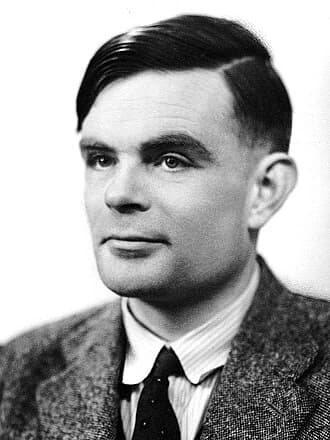
Alan Turing helped define what computation means before electronic general-purpose computers were practical. His abstract machine model showed how a simple rule-following device could represent any effective calculation and allowed him to prove that some problems are not computable. The same work clarified the idea of a universal machine whose behaviour is determined by stored instructions.
During the Second World War, Turing contributed to British cryptanalysis at Bletchley Park, especially methods and machines used against Enigma traffic. Later he worked on early computer design, machine intelligence, and mathematical biology, including patterns produced by reacting and diffusing chemicals. Turing was prosecuted in 1952 for homosexual activity and subjected to hormonal treatment; he died in 1954. His treatment demonstrates how institutions can persecute the very people whose work they depend on.
Defined the Turing machine and the modern mathematical concept of computability.
Helped develop methods and machines used against the Enigma cipher.
Proposed the imitation game, now known as the Turing test, for machine intelligence.