
Loading...
Loading...
Physical Sciences
Why this changed the world
Used telescopic evidence and experiment to transform astronomy and motion.
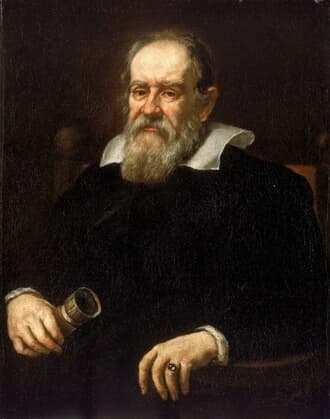
Galileo Galilei joined mathematical analysis, experiment, and improved instruments to investigate motion and the heavens. His telescopic observations revealed mountains on the Moon, moons orbiting Jupiter, phases of Venus, and an abundance of stars invisible to the naked eye. These findings challenged simple geocentric arrangements and the traditional picture of perfect unchanging heavens.
His studies of falling bodies and projectiles helped replace qualitative Aristotelian accounts with mathematical relationships. Galileo did not invent the telescope, nor did one observation alone prove heliocentrism. His importance lies in turning an instrument toward systematic astronomical questions and arguing publicly from the results. Conflict with Church authorities involved scriptural interpretation, patronage, personality, and the evidence available at the time; reducing it to “science versus religion” loses much of the history.
Observed Jupiter's moons, Venus's phases, sunspots, and the Moon's rugged surface.
Established quantitative laws for falling bodies and accelerated motion.
Championed experiment and mathematical description in physical science.