
Loading...
Loading...
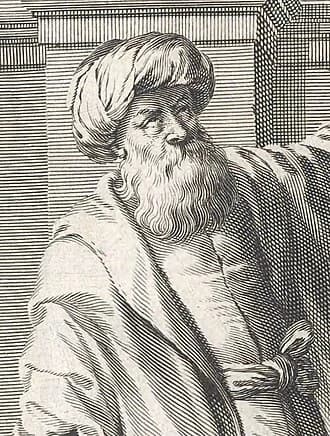
Arab & Muslim Pioneers
Why this changed the world
Rebuilt optics around experiment, mathematics, and the way light enters the eye.
Ibn al-Haytham, known in Latin as Alhazen, produced an extensive investigation of vision, light, reflection, and refraction. He rejected accounts in which rays were emitted by the eye and instead analysed vision as light entering the eye from illuminated objects. His Book of Optics combined geometry with carefully described observations and experiments.
His work examined mirrors, lenses, atmospheric effects, and the conditions under which perception can be mistaken. Calling him the sole inventor of “the scientific method” would impose a modern label on a much longer history. A more accurate achievement is that he joined mathematical modelling, controlled arrangements, and criticism of earlier authorities in an unusually sustained way. Latin translations later influenced European optics, while his arguments remain important evidence of the rich scientific scholarship developed in the medieval Islamic world.
Explained vision through light reflected from objects into the eye.
Used controlled experiments and mathematical reasoning to study optics.
Investigated reflection, refraction, camera obscura, and visual perception.