
Loading...
Loading...
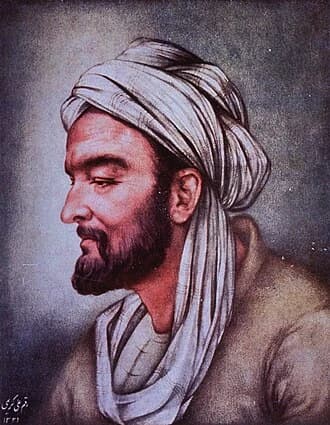
Arab & Muslim Pioneers
Why this changed the world
Created a systematic medical encyclopedia used across continents for centuries.
Ibn Sina, or Avicenna, was a Persian physician and philosopher whose writings attempted to organize medicine, natural philosophy, logic, and metaphysics into coherent systems. The Canon of Medicine compared diseases, symptoms, drugs, and therapeutic reasoning, drawing on Greek, Persian, Indian, and Islamic medical traditions as well as his own clinical experience.
The Canon became a major reference in parts of the Islamic world and, through Latin translation, in European universities. It should not be read as modern medicine: it contains humoral theory and treatments later abandoned. Its historical value lies in classification, differential observation, pharmacological discussion, and the effort to make medical knowledge teachable. Ibn Sina’s philosophical works were equally influential, especially his arguments about existence, causation, mind, and knowledge. His legacy belongs to both the history of medicine and the history of philosophy.
Authored The Canon of Medicine, a landmark medical encyclopedia.
Systematized diagnosis, pharmacology, clinical observation, and treatment.
Made enduring contributions to logic, philosophy, and theories of knowledge.