
Loading...
Loading...
Physical Sciences
Why this changed the world
Unified motion on Earth and in the heavens with mathematical laws.
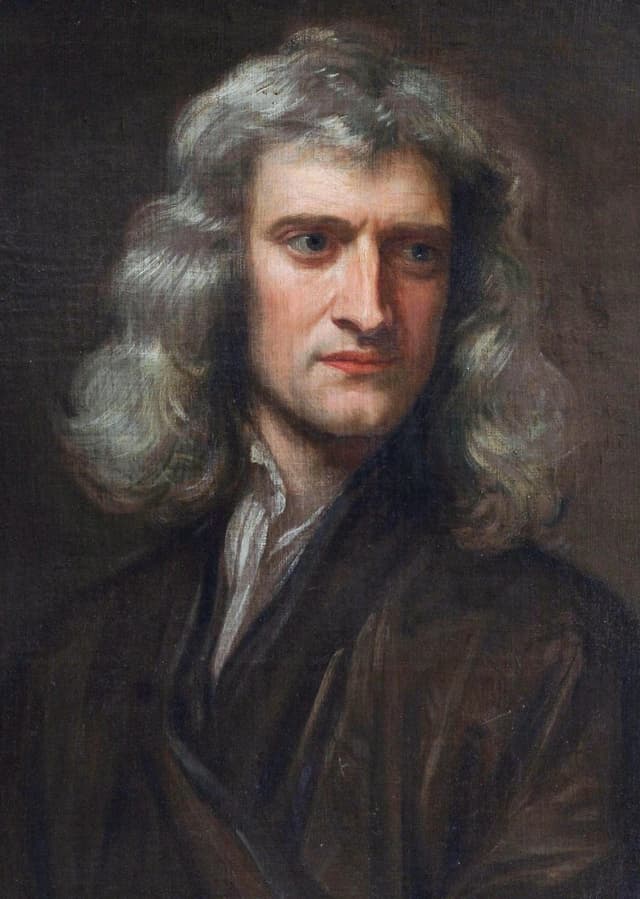
Isaac Newton unified terrestrial and celestial motion through mathematical laws that related force, mass, acceleration, and gravitation. In the Principia, he showed that the same framework could explain falling bodies, planetary orbits, tides, and the paths of comets. His development of fluxional methods formed part of the emergence of calculus, independently developed in another notation by Gottfried Wilhelm Leibniz.
Newton’s optical experiments demonstrated that white light contains a spectrum of colours and led him to build a practical reflecting telescope. His career was not an isolated sequence of inspirations: it drew on Kepler, Galileo, Descartes, Huygens, and a network of correspondence. He also spent enormous effort on alchemy, theology, chronology, and government service at the Royal Mint. Modern physics has revised Newton’s framework at relativistic and quantum scales, but it remains exceptionally accurate across much of engineering and astronomy.
Formulated the three laws of motion and universal gravitation.
Developed foundational methods of calculus.
Showed that white light is composed of a spectrum of colors.