
Loading...
Loading...
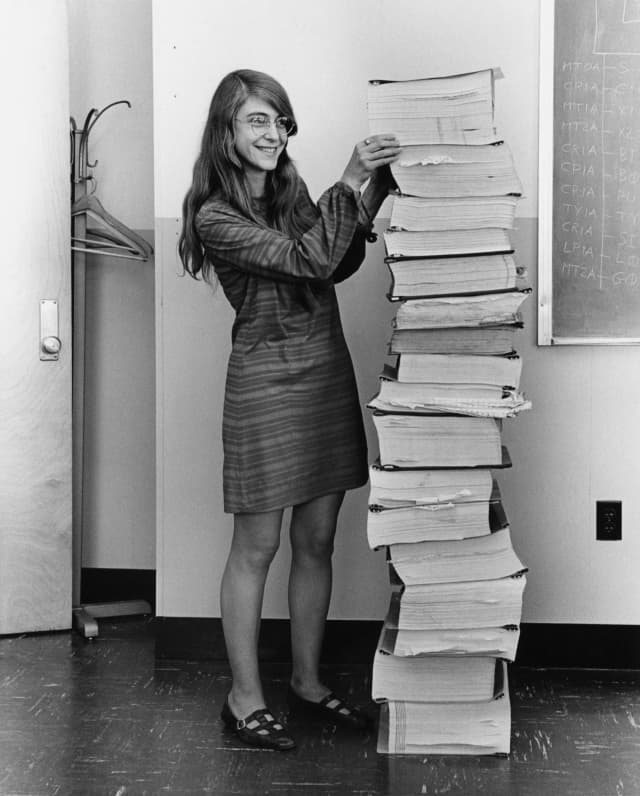
Computing & Algorithms
Why this changed the world
Led the fault-tolerant software effort that guided Apollo astronauts to the Moon.
Margaret Hamilton led software engineering work for the Apollo guidance computer at the MIT Instrumentation Laboratory. Her teams developed onboard flight software that had to operate with limited memory, respond in real time, prioritize critical tasks, and recover from some unexpected conditions. During Apollo 11’s descent, priority scheduling helped the computer continue essential guidance despite overload alarms.
Apollo software was a collective achievement involving programmers, engineers, astronauts, contractors, and mission controllers. Hamilton’s leadership is important partly because software was often treated as secondary to hardware even when mission safety depended on it. She later founded companies focused on software reliability and formalized ideas about system design and error prevention. Her career helped make software engineering visible as a discipline requiring architecture, testing, documentation, and responsibility rather than improvised coding.
Directed development of Apollo command and lunar-module flight software.
Advanced priority scheduling, error detection, and recovery in real-time systems.
Helped establish and popularize software engineering as a formal discipline.