
Loading...
Loading...
Physical Sciences
Why this changed the world
Pioneered radioactivity and opened a new era in atomic science and medicine.
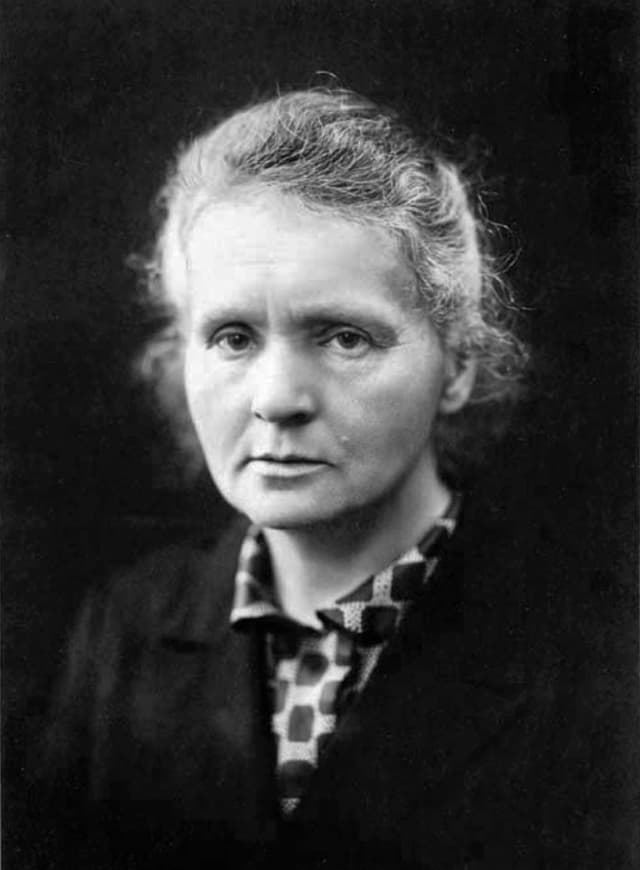
Marie Curie developed methods for measuring and separating radioactive substances at a time when atomic physics was still taking shape. Working with Pierre Curie and drawing on Henri Becquerel’s observations, she showed that radiation was linked to the atom itself rather than to an ordinary chemical reaction. The search led to the identification of polonium and radium and to years of difficult separation work with uranium ore.
Curie became the first person awarded Nobel Prizes in two different sciences. During the First World War, she helped organize mobile radiography units and trained operators, bringing X-ray imaging closer to wounded soldiers. Her laboratories influenced nuclear physics, chemistry, and medicine, although the health risks of prolonged radiation exposure were not yet understood. Her career also reveals the institutional barriers faced by women in European science and the persistence required to build authority inside them.
Discovered the elements polonium and radium with Pierre Curie.
Developed techniques for isolating radioactive isotopes.
Led wartime mobile radiography units that expanded medical X-ray use.