
Loading...
Loading...
Physical Sciences
Why this changed the world
Discovered electromagnetic induction, making motors, generators, and modern power possible.
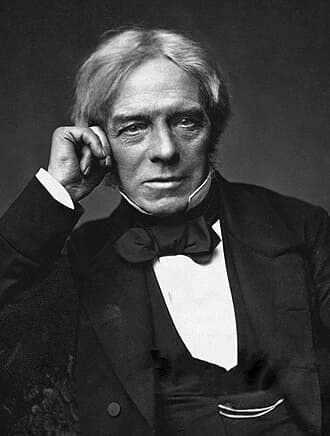
Michael Faraday rose from an apprenticeship in bookbinding to become one of the nineteenth century’s most inventive experimental scientists. At the Royal Institution, he discovered electromagnetic induction: a changing magnetic environment can produce an electric current. This principle underlies generators and transformers and linked electricity, magnetism, and motion in a new experimental framework.
Faraday also built early motors, established quantitative laws of electrolysis, investigated materials and gases, and discovered how magnetism can affect polarized light. He described fields through physical lines of force before later mathematics gave the concept a more formal expression. Faraday’s public lectures, especially the Chemical History of a Candle, showed the same discipline as his laboratory work: begin with an ordinary phenomenon, isolate processes carefully, and connect observations without pretending the evidence says more than it does.
Discovered electromagnetic induction and built an early electric generator.
Established the laws of electrolysis and advanced electrochemistry.
Introduced physical lines of force and discovered the Faraday effect.