
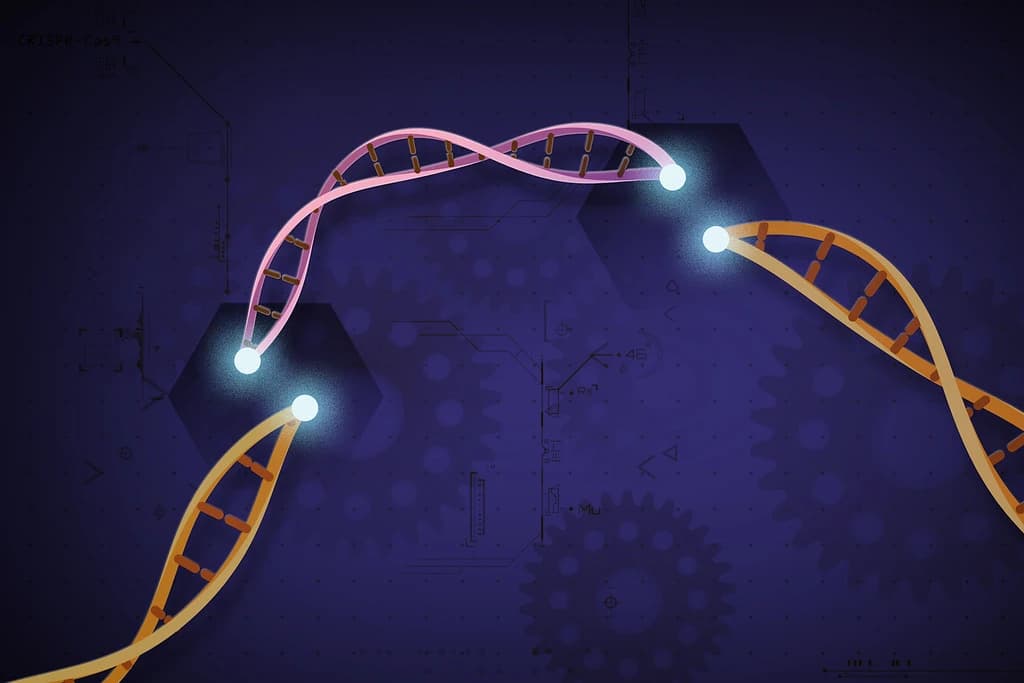
A borrowed microbial defence system
CRISPR gene editing grew from research into how bacteria and archaea defend themselves against viruses. These microbes can preserve short fragments of viral genetic material and use RNA guides to help CRISPR-associated proteins recognize matching sequences during later attacks.
Researchers adapted that principle into a laboratory tool. A designed guide RNA brings a protein such as Cas9 to a selected DNA sequence. Cas9 cuts the DNA, and the cell’s own repair processes modify the site. One repair route can disrupt a gene; another can use a supplied template to make a more specific change.
The word “programmable” is important but should not be mistaken for “perfect.” Guide design narrows the target, while cell type, DNA accessibility, repair behaviour, and delivery method influence the result.
Editing a dish is easier than treating a body
Cells can be removed from a patient, edited under controlled conditions, tested, and returned. This ex vivo approach has enabled therapies for certain blood disorders because blood-forming stem cells can be collected and transplanted. Editing inside the body is more difficult. The editor must reach the right tissue, enter enough target cells, act for an appropriate duration, and avoid harmful immune responses.
Researchers measure unintended changes at similar DNA sequences, but off-target activity is only one risk. A cut at the intended location can still produce an unexpected repair outcome. Some diseases also involve many genes plus environmental influences, so correcting one sequence may not remove the biological problem.
Newer tools change the editing strategy
Base editing can chemically convert certain DNA letters without making the same kind of double-strand break used by standard Cas9 editing. Prime editing uses a more elaborate guide and enzyme system to write selected small changes. These methods expand the toolbox, but each has its own limits involving edit type, efficiency, delivery, and unintended effects.
CRISPR tools are also used without permanently changing DNA. Modified proteins can regulate gene activity, label chromosome regions, or support diagnostic tests. The technology is therefore better understood as a platform for targeted molecular work than as one single procedure.
Medical possibility requires ethical boundaries
Editing somatic cells affects the treated person. Editing embryos or reproductive cells could pass changes to future generations. Heritable editing raises additional questions about consent, long-term risk, inequality, and changes that might spread beyond the original patient. The scientific ability to perform an edit does not by itself establish that the edit is safe, necessary, or socially acceptable.
Responsible development combines laboratory evidence, clinical trials, transparent oversight, long-term monitoring, and public discussion. CRISPR is powerful precisely because small molecular interventions can have lasting consequences.