A medicine designed for one genetic variant
On 15 May 2025, researchers from Children's Hospital of Philadelphia, Penn Medicine and collaborating institutions reported the first treatment of a patient with a customized in vivo CRISPR base-editing medicine. The patient, an infant known as KJ, had severe carbamoyl phosphate synthetase 1 deficiency, or CPS1 deficiency. The team moved from diagnosis to the first infusion in about six months.
CPS1 is a liver enzyme that starts the urea cycle, which converts toxic ammonia produced during protein metabolism into a form the body can remove. KJ carried damaging variants in both copies of the CPS1 gene. Without enough working enzyme, ammonia can rise rapidly and injure the brain. Standard care includes a tightly controlled diet, nitrogen-scavenging medicines and, when possible, liver transplantation. The New England Journal of Medicine report notes an estimated 50 percent mortality in early infancy for the severe neonatal form.
The treatment targeted one of KJ's specific variants rather than using a drug designed for a large patient group. That makes the case scientifically important, but it also means the evidence begins with a single person.
How base editing made the approach possible
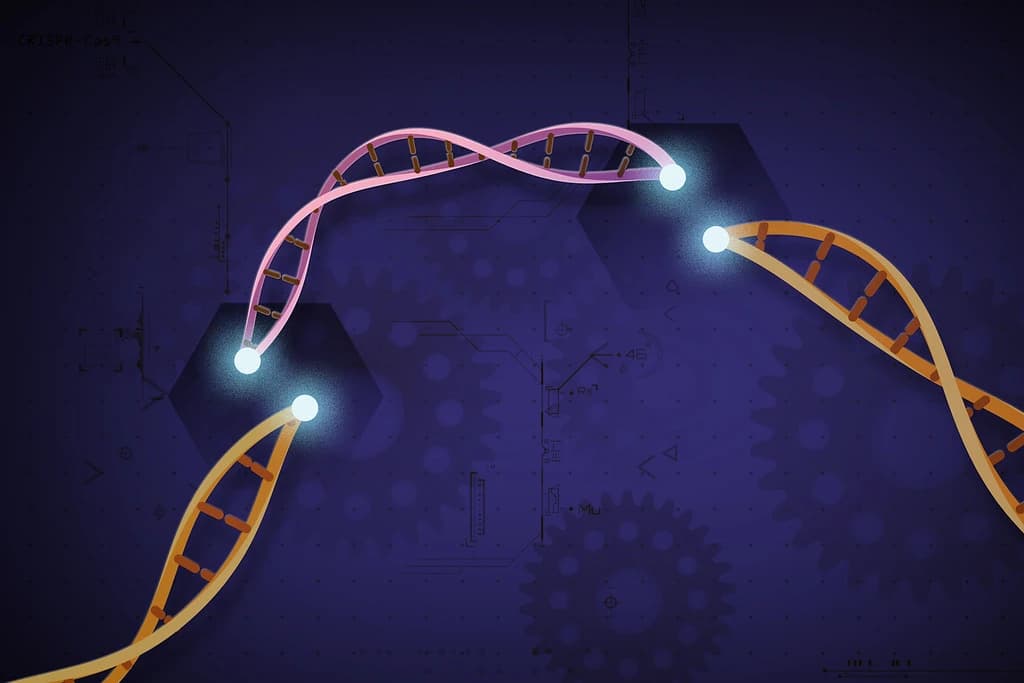
Traditional CRISPR-Cas9 editing often cuts both strands of DNA and relies on the cell to repair the break. A base editor instead couples a targeting system to an enzyme that changes one DNA letter into another without making a double-strand cut. The researchers selected an adenine base editor and a guide RNA intended to correct KJ's stop-causing CPS1 variant.
The medicine packaged messenger RNA encoding the editor and the guide RNA inside lipid nanoparticles. After intravenous infusion, these particles preferentially reach liver cells. The RNA is temporary, while a successfully corrected DNA sequence can remain as liver cells continue functioning. This delivery method also allowed more than one dose, unlike some viral-vector strategies that can be limited by an immune response to the vector.
Before treatment, the team tested candidate editors in cells, evaluated activity at the intended site, searched for possible off-target changes and studied a corresponding therapy in animal models. The patient-specific product still required regulatory authorization and manufacturing controls. Rapid work did not remove those steps; it compressed them around a platform whose delivery system and much of its validation process had already been developed.
What the early clinical report found
KJ received two infusions at approximately seven and eight months of age. During the seven weeks after the first infusion covered by the paper, clinicians increased the amount of dietary protein he could tolerate and reduced his nitrogen-scavenger medicine to half its starting dose. He also passed through viral illnesses without the ammonia crises that doctors feared. The investigators reported no serious adverse events and no unacceptable treatment-related adverse events during that short observation period.
These clinical changes are encouraging, but they are not equivalent to a measured cure. Doctors could not safely take a liver biopsy simply to count edited cells, and CPS1 function is influenced by diet, medicines, illness and normal growth. The paper therefore presents feasibility and early clinical response rather than a controlled estimate of efficacy.
Why the platform matters beyond one patient
Many ultra-rare disorders are caused by variants found in too few people to support a conventional large drug programme. A reusable platform could keep the lipid nanoparticle and base-editor framework largely stable while changing the guide RNA for an eligible mutation. Shared production, safety testing and regulatory methods might then make additional N-of-1 or small-group therapies practical.
That possibility has strict boundaries. Not every DNA change can be corrected by the available base editors, not every organ is reached efficiently by liver-directed nanoparticles, and each new guide can create a different off-target profile. Cost, manufacturing capacity, fast genetic diagnosis and fair access are unresolved. Permanent edits also require years of surveillance for delayed effects.
The 2025 case established a concrete proof of process: a team identified a newborn's causal variant, designed a tailored editor, completed preclinical and regulatory work and delivered it while treatment could still help. Larger experience and long follow-up will determine whether that process can become a repeatable form of medicine.